


2026 has seen the U.S. car insurance market stabilize after a few years of constant rate spikes. Recent reports from Insurify show that the insurance rate would roughly increase by 1% this year. Thus, if you are planning to opt for a car insurance plan in 2026, it is the perfect time.
However, it is essential for you to find the best plan that protects your finances during the most catastrophic situations. This makes car insurance comparison essential for car owners to get the auto insurance plan in 2026.
It is essential for car owners to consider these elements and not opt for the insurance that looks the cheapest at first glance.
Before you can evaluate a quote, you need to know the industry averages. According to 2026 market projections from ValuePenguin, here are the drivers that they are facing:
If your current premium sits drastically above these benchmarks and you have a clean driving record, it is time to shop around.
When you compare car insurance, looking at a single base rate is misleading. A company that is cheap for a perfect driver might penalize you the most for a simple fender bender.
Here is how the top national providers compare when people look at the actual rate fluctuations based on driving history and their signature discount programs:
*This data represents the 2026 national average estimates for full coverage. Individual rates will vary based on factors like car model, driving history, past claims, and more.
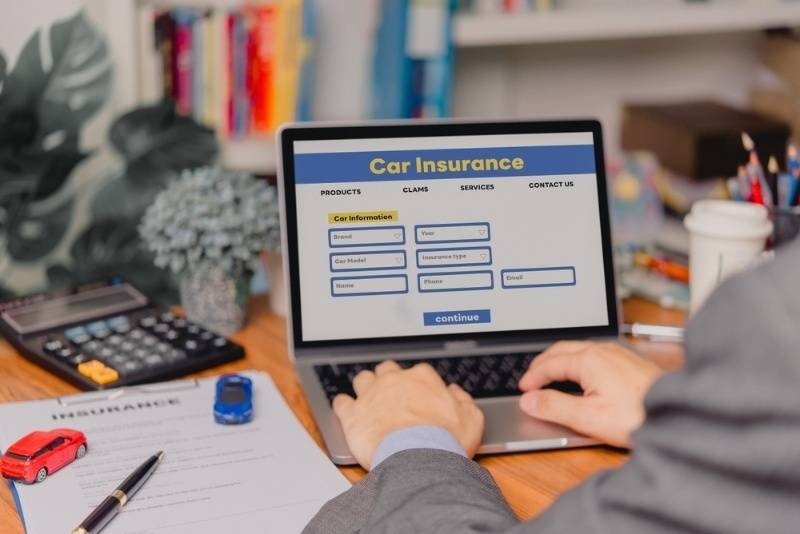
When you sit down to compare car insurance, do not just blindly accept the final monthly price. Insurers actively manipulate your coverage limits to make a stripped-down quote look significantly cheaper. You must follow this exact methodology to ensure you are properly comparing carriers:
When pulling quotes from different carriers, force them to use the exact same parameters.
Default to 100/300/100 ($100,000 per person / $300,000 per accident for bodily injury / $100,000 for property damage). State minimums are rarely enough to protect your assets in a severe crash.
Set your collision and comprehensive deductibles to the same amount (e.g., $500 or $1,000) across all quotes.
In 2026, almost every major insurer will push usage-based insurance (UBI). Programs like Progressive’s Snapshot or State Farm’s Drive Safe & Save track your braking, speed, and mileage via a smartphone app. If you are a safe driver or work from home, a UBI program can instantly slash a higher base quote by 10% to 30%.
Before finalizing your choice, look up the provider on the National Association of Insurance Commissioners (NAIC) website. The NAIC tracks how many complaints a company receives relative to its size. An index score of 1.0 is average; anything significantly higher means the company actively frustrates its policyholders during the claims process.
By relying on third-party financial ratings and enforcing strict limit matching, your car insurance comparison will reveal which carrier actually offers the best value for your specific household, rather than just the cleverest marketing.
Grabbing the cheapest monthly premium in 2026 is a trap if the carrier refuses to pay out when you actually crash. You have to play the system to win. Establish a hard market baseline, force underwriters to compete over your driving data, and ruthlessly verify their actual payout history. Therefore, you need a side-by-side car insurance comparison of the different quotes offered by multiple carriers to find out the option that suits you the most.
Looking for the best insurance plans for car owners? Start with a car insurance comparison to find the policy that can ensure the safety of you and your loved ones. This side-by-side analysis can consume a lot of time, but it is essential for the long-term security of your finances.
Run new quotes every 6 to 12 months or right before renewal. Always shop around after major life changes—like moving, getting married, or adding a teen driver—because these instantly change how the algorithm calculates your price.
Yes. You can dump your carrier at any time. Most insurers will legally issue a prorated refund for the days you already paid for, though a few might tack on a minor early cancellation fee.
If you finance or lease a new car, yes. Cars instantly lose value the second they leave the lot. If you total the vehicle, gap coverage pays the massive difference between what the car is actually worth and the loan balance you still owe the bank.
In most states, absolutely. A weak credit score tells the algorithm you are a financial liability, triggering an instant rate spike regardless of your driving record. However, states like California, Hawaii, Massachusetts, and Michigan fully ban insurance companies from using your credit to set prices.
This content was created by AI